Capital Strategy Advisor
Corporate Finance Solutions specializes in transactional and corporate structuring, tax engineering, ownership transitions, and risk solutions for privately held companies — particularly when involving insiders or family.
- — Liquidity creation without loss of control.
- — Multi-generation business transitions.
- — Advanced tax-advantaged structures designed for a lasting legacy.
Since 1988 — hundreds of transactions, billions in assets structured, and hundreds of millions in tax saved.
By the Numbers
Transactions Completed
Since 1988
Taxes Saved
For business owners
Assets Structured
Across industries
Case Studies
Case Studies
$10M Revenue Western Business — Next-Generation Transition
Situation
Owner wanted to transition a $10M revenue / $1.5M EBITDA company to Next-Gen family. Initial structure required $10M pre-tax earnings to generate $6M purchase price after taxes.
Strategy
CoFinSol restructured the transaction to make the purchase largely deductible.
Result
- —Next-Gen paid $9M but net after-tax cost was $5.4M
- —Owner received $9M instead of $6M
- —Next-Gen saved $3.6M in taxes
- —Owner increased net proceeds by $830K
$70M Revenue Mid-America Business — Estate Tax Mitigation
Situation
$50M business transferring to children. Expected estate tax liability: $9.6M.
Strategy
Legitimate valuation restructuring reduced company valuation by 40%.
Result
- —Valuation reduced to $30M
- —Estate tax dramatically reduced
- —Family preserved more than $9M in tax savings
- —Next-Gen gained ownership of a rapidly growing company
$25M+ Tech Company — Insider Minority Shareholder Sale
Situation
Highly profitable tech company with EBITDA exceeding $5M. Minority insider lacked liquidity to purchase ownership.
Strategy
Structured a 10-year buy-in and buy-out using SBA financing and structured payments.
Result
- —Owner guaranteed $40M payout over 10 years
- —Sale price increased by $15M
- —Owner retained control during transition period
$15M Southern Healthcare Company — Family Buyout
Situation
Family member buyout in a $60M valuation healthcare company.
Strategy
Specialized trust structures to defer taxes.
Result
- —90% tax deferral achieved
- —Each party saved over $6M in taxes
- —Tax-free capital accumulation inside trust structures
$3M Northern Law Firm — Tax Deferred Cash Out
Situation
Owner selling to non-family insiders. Valuation: $4M.
Strategy
Tax Deferred Cash Out structure.
Result
- —Owner deferred $1M capital gains tax for 30 years
$60M Financial Services Firm — Risk Premium Strategy
Situation
Owner identified significant uninsured operational risks.
Strategy
Structured deductible risk premiums transferred into a separate entity.
Result
- —$19.3M accumulated tax-deferred
- —$7.8M in tax savings
- —Company value increased significantly
$11M Mechanical Services Company — Third Generation Transition
Situation
Next-Gen lacked liquidity to buy out the owner.
Strategy
Structured consulting agreements and deductible purchase payments.
Result
- —$7M purchase cost only $4M after tax
- —Next-Gen saved $3M in taxes
- —Company doubled revenue post-transition
Midsouth Manufacturing — $5M Acquisition Structure
Situation
Traditional structure required $9.22M after tax to acquire the company.
Strategy
CoFinSol developed a pre-tax acquisition structure.
Result
- —After-tax cost reduced to $2.71M
- —Net savings: $6.56M
- —No liens on buyer assets
Real Estate Investor — Liquidity and Ownership Strategy
Situation
A real estate investor owned a fully leased property worth approximately $13.5M with roughly $5M of debt, and wanted to access most of the value tax-free while retaining ownership and control. Holding the property projected a net return under 3% — barely keeping pace with inflation before income taxes.
Strategy
CoFinSol reviewed three paths: retain the property, sell it, or sell it into a new ownership structure that refinanced it and returned the proceeds tax-free. The property was sold simultaneously for $15M — $7.5M raised from investors through a convertible debt structure (4% current cash plus 4% preferred, with sale proceeds) and $7.5M in bank financing — retiring the $5M mortgage while the owner retained 20%.
Result
- —Owner received roughly $10M, effectively tax-free
- —20% ownership retained, with no transaction costs on the sale
- —$10M reinvested at 6% grows to about $14M in seven years
- —Investors earned roughly 9.5% IRR; owners about 12–13%
- —Bank debt fully repaid at the end of year seven
Business Turnaround — IRS and Creditor Debt Restructuring
Situation
A company doing about $3.5M a year had been bidding work below cost to win revenue and could not extract a profit. It owed nearly $1M to suppliers and more than $1.5M to the IRS in unpaid payroll taxes, putting the owner's home and his freedom at risk.
Strategy
CoFinSol took on the turnaround: a minimum 33% gross margin on every sale, overhead cut from roughly 25% to 12% by operating remotely, and renegotiated payment plans with the IRS and every creditor.
Result
- —Owner's home saved and prison avoided
- —IRS payments reduced from $25,000 to $5,000 a month
- —Approximately $300,000 of working capital generated by year-end
- —Out of debt within two years, apart from the long-term IRS arrangement
- —Payroll taxes kept current; business rebuilt
Mechanical Services Company — Partnership Deadlock and Succession
Situation
A mechanical services company had two elderly partners — one in his eighties holding 51% control, and one in his seventies whose two sons worked in the business. The partnership agreement contained no dispute-resolution mechanism and no buyout provisions, and the controlling partner would not sell.
Strategy
CoFinSol amended and restructured the shareholder agreement so the managing and voting partner kept his office while authority and control passed to the younger partner, who could then structure the transfer to his sons. No cash and no bank debt were required.
Result
- —No cash and no bank debt required
- —No multiple valuations, outside attorneys or arbitration
- —Control transferred and the sons took over the business
- —Processes and systems put in place
- —Company now thriving
Mid-Atlantic Law Firm — Profitability, Acquisition and Exit
Situation
A substantial Mid-Atlantic law firm was struggling with profitability. Earnings flowed to producing partners with no real accounting for direct costs, administrative overhead or allocation, and the firm captured only about 33% of every engagement.
Strategy
CoFinSol raised the firm's take to 39.6%, the top ordinary income rate at the time, with added non-legal value — and increased hourly fees by roughly 20%, still an effective discount against inflation of more than 40%. No client objected. The firm then acquired another law firm using no cash and fully deductible earnouts.
Result
- —Nearly a 30-fold increase in firm valuation within a few years
- —Sold to a private-equity-backed firm at about 4.5x true net profit, 100% cash at close
- —Seller retained three additional years of 15% of fee revenues, almost doubling the initial sale price
- —Initial cash structured tax-free through a convertible note
Each engagement is unique. These outcomes reflect real structures designed around specific client situations.
See How This Could Apply To Your BusinessCase Studies
Case Studies in Detail
Healthcare Company — Acquisition
This healthcare company was buying another manufacturer and I showed them how they could purchase this manufacturer with pre-tax money and sellers dollars. This was approximately a $5 million purchase. We offered $250,000 down and $75,000 a month until it's paid off with offsets coming at the end. For lack of performance, the after tax cost was going to be over $9.2 million, including state income tax. They were going to have to get an SBA loan of $3.5 million after a $500,000 deposit and a $1 million seller note. All of their business assets would have been leaned, as would have, would have all the equity in their house and their primary residence. And there were two of them as they were partners. Now they have no liens and their after tax cost will be only $2.71 million. Because of the structure I developed on their behalf a net savings of $6.6 million more than the entire purchase price.
Real Estate Investor — Liquidity and Control
A real estate investor was wondering how he could optimize his real estate holdings and still retain ownership and get most of the money tax free without giving up control. This property was worth approximately 13 and a half million dollars. The debt on that was approximately $5 million.
We looked at three scenarios. Do they just retain the property? Do they sell the property at today's rates or do they keep the property, refinance it with new ownership and get the money tax free? So here's how it played out. If they were to have kept the property, they would've had a de minimis future return on the investment. And the reason is most of the increase in the value had occurred earlier on and because of it was now fully leased out and no longer a value opportunity, their net projected rate of return would've been under 3%, barely keeping up with inflation and certainly under inflation after income taxes.
So that was a non-starter to keep the property. What would happen if we sold the property? Well, there'd be transaction costs that usually would run, in this case close to 10%, so almost over a million and almost a million and a quarter. And then they would have to pay off the mortgage and then they would have to pay capital gains taxes. Oh, sure, there could be a 10 31 exchange. However, that merely kicks the tax liability down the road and eventually somebody's going to have to pay that tax. Even if there will be a potential step up in basis at death, still there would be some tax owed and the bigger the value of the real estate growth, the more the tax would be owed.
The third option, we decided to sell this property not for 13 and a half million dollars, but for $15 million. And we're gonna do it in the following way. We're going to raise seven and a half million dollars from investors and we're gonna borrow seven and a half million dollars from the bank. With a simultaneous transaction. We will have paid off the $5 million remaining mortgage and retained a seven and a half million dollars remaining mortgage such that the owner now would get $10 million and we're able to get that money through a a tax free because the new investors would be buying a convertible debt structure. I created a de insure for them where they would get 4% of the cash currently, plus a preferred additional 4% over the term of the ownership, which is rejected to be seven years plus, they would get all the proceeds of the profits upon sale.
The owners are retaining a substantial percentage of this property, 20%, and the owners would be getting all 15 million minus their mortgage or $10 million with no transaction costs. There'd be some costs of raising the capital perhaps, but only on the seven and a half million. 'cause The bank already embeds that into their loan proceeds. We estimate that would be approximately two to 3% of the seven and a half million dollars. So effectively they're getting just shy of $10 million tax free. That money would grow at whatever rate you think it would grow at in whatever alternative investment you think you might put it in. At the end of the seven year period of time, that $10 million now becomes a substantially higher number. And we used a 6% growth rate and they were close to about $14 million. At the end of seven years, the investors would have gotten approximately nine point a half percent internal rate of return based on this structure. And the bank debt was completely paid off at the end of seven years by a sale to a third party or by a repurchase of the owners with a refinance with the bank. All in all, the owners did substantially better achieving approximately a 12 to 13% rate of return. The investors achieved a better than most other investment opportunity with preferred returns and di minimis risk. And if the risk became heavy, then they would be able to convert their loan to equity.
All in all, everybody comes out better. Everybody is happy.
Turnaround Opportunity — IRS and Creditor Debt
This case study is about a turnaround opportunity. It was a company that's been doing about three and a half million dollars per year and wound up owing several millions of dollars both to the IRS and to private creditors over the period of time. Because the owner made the critical error of effectively buying his jobs, he would bid out the jobs at such a low rate to get the gross revenue that he was unable to extract a profit from them because his cost of delivering the product and service exceeded whatever profits he may have enjoyed. In fact, he went negative to the point where he owed almost a million dollars to his suppliers and over a million and a half dollars to the IRS having failed to make payroll taxes.
He was referred to me by another client who was good friends with him and I agreed to take him on in the turnaround capacity. We structured an arrangement whereby he would change his offerings such that he would never have below a 33% gross margin on any sale. We eliminated lots of his overhead expenses such that he went down from approximately 25% in overhead to about 12%, even to the point where he's operating out of his house and garage and, and all the other employees are remote.
We were able to save his house, avoid him having to go to prison and renegotiating with the IRS and improve his sale structure so that he has approximately $300,000 worth of working capital by the end of the year to pay down the, the debts. $25,000 a month was going to pay down the debts. We negotiated for $5,000 a month to the IRS. We negotiated for $6,000 to go to some random suppliers and the rest to go to the other suppliers and the IRS. In two years, he was out of debt completely except for the long, long-term loan to the IRS, which they were happy to deal with. Kept him current on his payroll taxes and he was able to save some money and build his business back up.
Southeastern Mechanical Services — Partnership Deadlock
Southeastern Mechanical Services company had two elderly partners, one in his eighties, one in his seventies. The 70-year-old had two sons in the company. The 80-year-old was afraid to sell the company because he feared for his own mortality. If he were to sell the company, he feared he would die. He was the controlling partner with 51%. They had no dispute resolution mechanisms in their partnership agreement. They had no buyout provisions in the partnership agreement that Did not require multiple valuations, multiple attorneys, multiple expense and multiple brain damages.
They hired me to solve the problem. We were able to permit the managing voting rights partner to remain in the game to stay, keep retain in office while giving authority and control to the younger partner who is then able to structure away for the sons to take over the business. This required no bank debt, no cash, just a simple amending and restructuring of their shareholder agreement. We put PLA processes and systems in place and now this company is thriving.
Mid-Atlantic Law Firm — Profitability and Exit
A Mid-Atlantic law firm of substantial size had been struggling in terms of profitability. As many professional services types of companies suffer, most of the earnings are delivered to the producing professionals, high level producing professionals. And these individuals had no serious accounting mechanism to identify what their cost of direct costs were in the cost of services sold and how to manage the administrative costs and allocate them properly without ex damaging the income to the producers, especially the primary producer. They were extracting approximately 33% of every deal they engaged in.
And the first thing we did was suggest that they go to 39.6% because at the time, that was the highest Ordinary income tax rate. Now it's at 40.8%, which is the 37% federal plus a 3.8% Obamacare tax. That extra 6.9% On the deal cost them precisely zero customers. They provided some extra value in there that was not legal time and all of a sudden profits started to flow to the bottom line. It's not, it's in, in a way it's similar to having A Increased their fees on an hourly basis by some 20%. Considering inflation has gone up in the last several years, by well over 40%, that's a, an effective discount to the customers. Not one customer balked about the new pricing structure because they were all success fees anyway. And, and part of the value add was the lawyers were able to increase the value of the deals in excess of their increased fees.
Then we purchased another law firm using no cash and effective earnouts that were completely deductible to the owner and taxable to the recipients. This increased the total revenue substantially and increased the net income substantially to the point where we had almost a 30 fold increase in the valuation of this law firm in a matter of a few years. The owner then sold this law firm to a much bigger private equity finance law firm. Got a hundred percent cash on the valuation with a very good multiple for that industry on the order of four and a half times of true net profit, not simply total owner benefit. Plus the seller was able to negotiate to well, I was able to negotiate on behalf of the seller that the seller would retain an additional three years of 15% Of the company's fee. Revenues would go to the seller for three more years, almost completely doubling his initial sale price.
Ask this, is this additional effective earnout while not being, while being income, not being income taxable is capital gains taxable. The initial cash amount is completely tax free. And we structured it that way by having the buyer lend the money to the corporation on a convertible note that they can convert at will over certain periods of time so that they do not have a significantly impaired balance sheet. Their initial investment was the same amount after tax. The buyer, the new buyer, the seller's company then turned around and re loaned that to the seller individually, who has a long term 30 year deur note back to the company that he was selling, which is now simply a shell because of the asset purchase from the buyer. And the seller of the company would then owe to his shell company approximately 5% on per year on the cash he's re on the millions of dollars of cash he's receiving for the sale of the company. That 5% will be deductible to his personal income and become income taxable to his now shell company.
And then at the end of 30 years, the seller will owe either the balance of the note, which would be a hundred percent since it's an interest only 30 year debt. Simple interest or owe the Inc the, in the income tax on the forgiveness of the loan, whichever is less. And of course the, for the income tax would be far less and that amount would come out of his taxable estate. And in 30 years, that amount will have an inflation effect of something like 30 cents on the dollar. Comparatively speaking.
Welcome
A Message From Dr. Mitch Levin
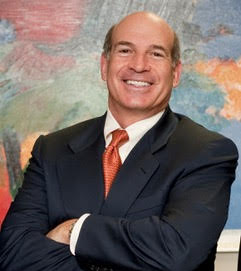
Dr. Mitch Levin — Founder, Corporate Finance Solutions
What We Do
Areas of Practice
Liquidity Without Control Loss
Transaction structuring that allows owners to extract capital while maintaining operational control.
Acquisition Structuring
Business acquisition design including SBA structuring, seller financing, and long-term payment structures.
Ownership Transitions
Next-generation transfers, management buyouts, estate tax mitigation, and deferred tax structures.
Additional Expertise
Real Results
Post-Engagement Results
Summary from one completed client engagement (January 2025). Figures represent actual, verified outcomes.
Total Tax Savings
Accumulated across transaction structuring, estate planning, risk premium strategies, and tax engineering — all completely legitimate and court-tested.
New Wealth Created
Capital accumulation through strategic investment vehicles, liquidity instruments, and tax-advantaged structures — most of it guaranteed.
Total Engagement Value
Combined value of tax savings and new wealth created that would not have existed without the engagement. Verified from one completed client engagement (January 2025).
What Owners and Advisors Are Saying
"Corporate Finance Solutions got me $1.4m more after tax in the next generation transfer; my attorney and accountant were astounded."
John M.
Large Mechanical Services Company, Miami
"I successfully transitioned my $10m net worth company tax free, receiving more cash, and with no burden to my children."
Joe D.
Large Mechanical Service Company, Sarasota
"Corporate Finance Solutions saved me millions in tax, and increased the value to my children by 41%. Thank goodness I could avoid an ESOP with all its risks and pitfalls and expenses. Now we are on to achieving $100m in the next 3 years."
Peter W.
Large Contracting Company, Northwest
"CoFinSol increased my proceeds as a result of its planning and strategies by over $3m."
Warren S.
Mid-Size Distributor, South
"We resisted the next-gen transition until Corporate Finance Solutions showed us how to increase the cash transfer by more than $2m and lowering the tax bill by at least $3 million at the same time, preserving my key employees, and allowing me to participate in the future growth of the company."
Jordan P.
International Laser Company
"You helped us transition to the next generation in ways we never dreamed possible. The owner received $1m more than full value, and the buyers are ecstatic to have increased our value by more than $4.6m…Thank you Corporate Finance Solutions!"
Scott U.
Health Care Multi-Location, West Coast
"Saved over $1.6M in taxes in transitioning to the next generation."
J.B.
Midwest Health Care Company
Resource Library
Insights, Strategies & Resources
Free reports, videos, and premium materials from Dr. Mitch Levin — covering liquidity, tax strategy, investing, and ownership transitions for serious business owners.
Free White Papers & Reports
How to Attract and Retain Top Talent
Request a CopyBomb Proof Investment Portfolio, Part 1: 10 Myths That Cause Investors to Fail
Request a CopyBomb Proof Investment Portfolio, Part 2: The 16 Truths About Investing
Request a CopyBomb Proof Investment Portfolio, Part 3: The 7 Factor Focus
Request a Copy15 Mistakes Business Owners Make
Download PDFHow to Build a Business Worth Owning — and Selling
Download PDFVideo Library
More on Dr. Levin's YouTube channel
A Message From Dr. Mitch Levin

Client Success Story
Insurance Agency Owner
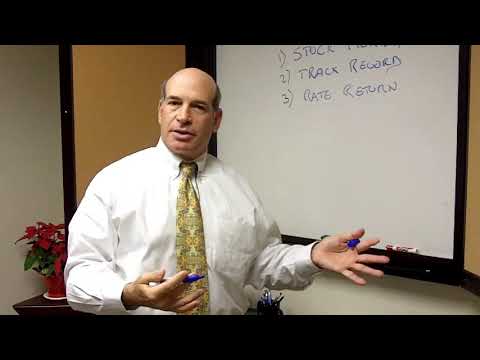
The Five Myths of Investing
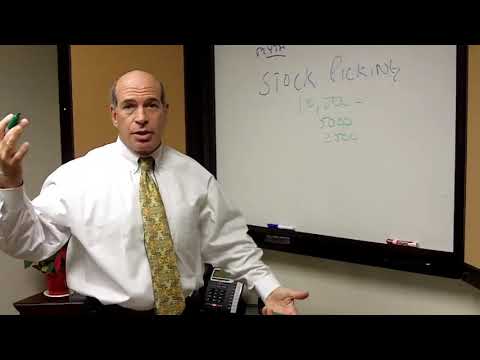
The First Myth of Investing: Stock Picking
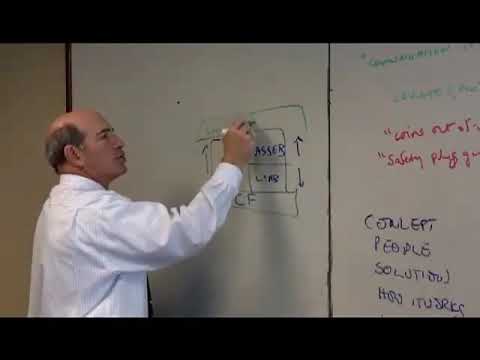
Make Your Financial House a Financial Fortress
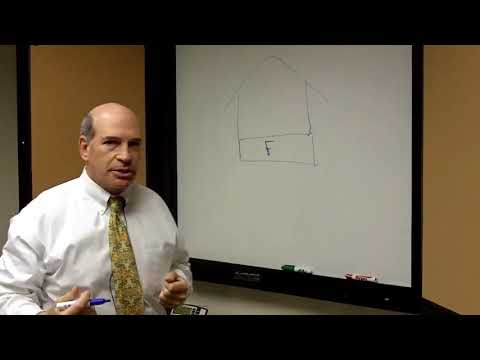
Build Your Financial Fortress
Turbo Charge Your Finances
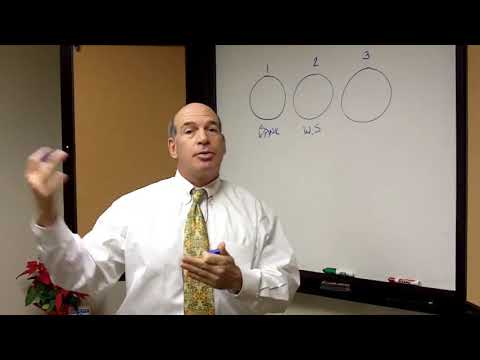
The Three Phases of Money
Math Is Not Money: How to Invest Your Money
Opportunity Costs in the Financial Industry
Risk and Tax Management
Registered Investment Advisor: Truth in Costs & Fees
Structured Institutional Funds and the CRSP Model
Realize Your Retirement by Making Great Financial Decisions
The Power of Compound Interest
Investor Behavior, Part 1
Investor Behavior, Part 2
How Financial Media Cripples Its Audience
Premium Resource
Strategic Print Newsletter
Delivered via USPS to your door. Exclusive strategies, case studies, and insights not published elsewhere. Free to Private Clients and Mastermind Members.
Books by Dr. Mitch Levin
A Four-Time National Best-Selling Author
Practical strategies for business owners, leadership, wealth, and long-term success — including the free book offer, "Whose Job Is It, Anyway?"
View Dr. Levin's BooksAbout
About Dr. Mitch Levin
MD, CWPP, CAPP — Financial Physician™
Dr. Mitch Levin — known as the "Financial Physician™" — is a four-time national best-selling author, international speaker, and trusted business advisor to entrepreneurs, executives, and high-income professionals. He founded Corporate Finance Solutions in 1988 to advise privately held companies on complex transaction structuring and ownership transitions.
His career began in the health-care field in 1986, financing, opening, owning, and operating a large series of eye surgery practices and surgery centers in Central Florida. Over the following 15 years his holdings included "Horizon" (42 independent and free-standing MRIs across seven states) and "St. Vincent's Rehab Clinics" in Illinois and Florida — sold twice, first to a publicly-traded company and then to a private enterprise — along with several commercial office buildings, the largest at some 90,000 square feet.
In 2010 he built what is now Summit Wealth Partners (offices in Jacksonville, Michigan, Naples, and Orlando) together with Summit Asset Protection Group and Investors Advocates, which he sold in 2017. He has been board chair of an Opera company and a large Foundation, and president of a Home Owners Association consecutively from 2003–2020. He was a visiting professor at the University of Central Florida and is the publisher of three private newsletters to over 5,000 subscribers for more than 13 years.
His work focuses on helping owners:
- —Extract liquidity without giving up control
- —Transition businesses across generations
- —Reduce estate and transaction taxes
- —Structure insider ownership transitions
Corporate Finance Solutions accepts only 3–4 engagements per year from companies typically employing 60–600 employees.
Ready to Unlock Serious Capital?
If your business is strong and you want to turn equity into opportunity, CofinSol can help.